The Irvine advantage
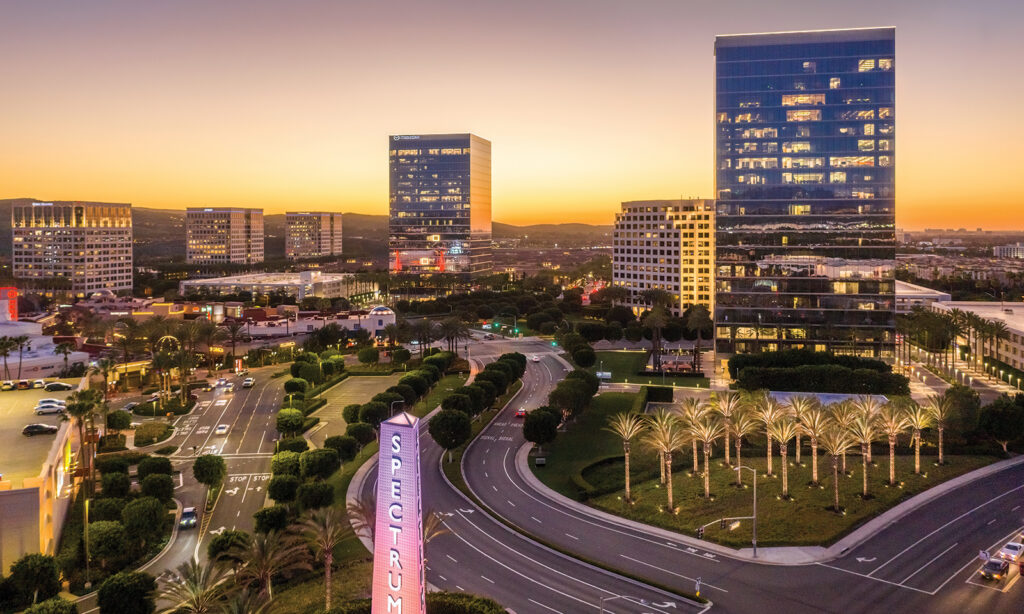
Cities inevitably change. A well-conceived master plan’s value lies in how its fundamentals can remain consistent even as conditions change over the years. By identifying the essential building blocks of a healthy community, a master plan can adapt to a shifting economy, community needs and new technologies. Here’s a short list of those building blocks in Irvine.
Education first
Irvine was uniquely designed as a City of Intellect. The Master Plan focused on UC Irvine, ensuring higher education was the community’s anchor. This academic focus extends to Irvine Valley College. By prioritizing the university and college infrastructure first, the city naturally cultivated the excellence of Irvine Unified School District, creating a seamless pipeline that remains a primary draw for families.
Open space legacy
Through the landmark Open Space Agreement, more than 60% of the original Irvine Ranch has been permanently protected and dedicated to public ownership. This provides residents with immediate access to hiking, biking and wilderness areas that will never be developed.
Park proximity
Irvine’s national ranking by the Trust for Public Land is a mathematical result of the village plan. The Master Plan dictates that every resident should be within a 10-minute walk of a park. While other cities treat parks as leftover parcels, Irvine uses them as the central plazas and greenbelt paseos around which neighborhoods are built.
The urban forest
Irvine is a leader in environmental aesthetics through its Urban Forest Master Plan, which aims for 30% citywide canopy coverage. The forest creates a natural cooling effect and a lush, soft aesthetic. It’s an intentional investment in biological infrastructure that improves air quality and creates visual serenity.
Strategic retail
Irvine’s retail and restaurant landscape is designed for convenience and architectural longevity. By using a tiered retail system, the city offers Irvine Spectrum Center as a destination for shopping and entertainment, complemented by specialized neighborhood centers in the villages. This dispersal ensures that every resident has access to high-quality amenities within minutes.
Innovation districts
Irvine is the economic engine of Orange County because its business parks are built with the same village philosophy as its homes. By creating dedicated districts for technology and life sciences – such as UCI Research Park – the city fosters a cluster effect that attracts global headquarters.
Faith Clusters
The city integrates spiritual life into the plan. Instead of houses of worship competing for space in industrial zones or causing parking issues in residential tracts, the Master Plan strategically grouped religious institutions near community hubs, ensuring that spiritual centers are accessible, aesthetically integrated and well-supported by the city’s broader infrastructure.
Sophisticated streets
It’s easy to overlook the relative ease of movement in Irvine as compared to other cities. Wide, landscaped arterials were designed and built to carry the bulk of vehicle movement, while internal village layouts use loop designs to keep residential streets quiet and dedicated to families and pedestrians.
Landscaped setbacks
The Master Plan requires deep, landscaped setbacks along all major roadways. This soft infrastructure hides structures and walls, creating a parkway experience for drivers and providing a peaceful acoustic buffer for the homes behind the greenery.
Village identification
Each village – from Woodbridge to Portola Springs – features unique architectural motifs, signage and even specific colors for street furniture (benches, lampposts, bike racks). This wayfinding gives residents a sense of belonging and identity, making the city feel intimate and organized.