Irvine is national leader in parks and open space
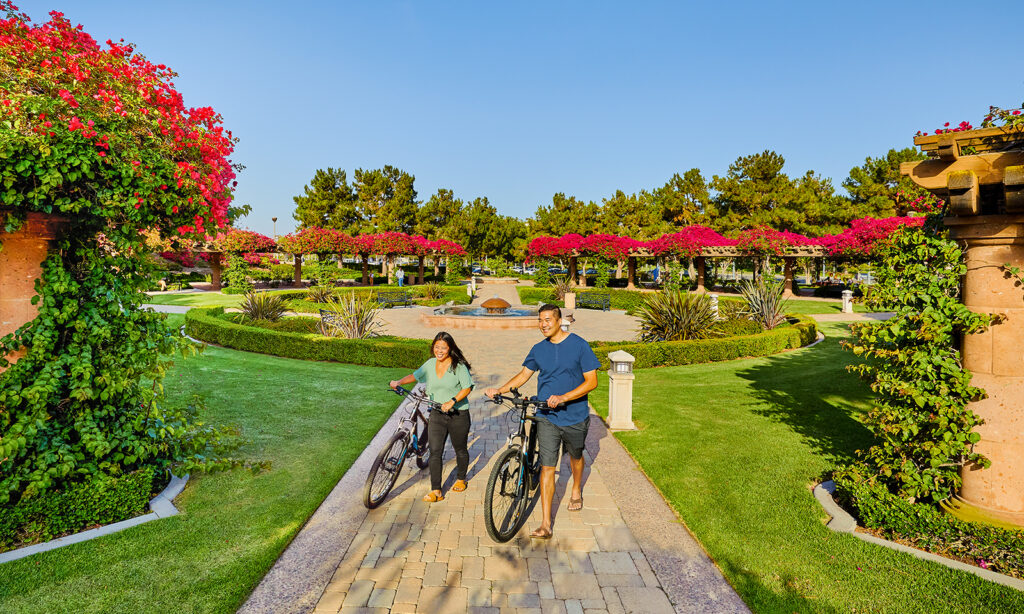
Irvine has officially secured its spot as a national leader in urban excellence, capturing the No. 2 spot in the 2026 ParkScore index for the second year in a row.
Irvine’s score of 84.1 on Trust for Public Land’s 2026 ParkScore Index ranks behind only Washington, D.C., which scored 85.1. Thanks to decades of masterplanning with an emphasis on parks and open space, the report found that 94% of Irvine residents live within a 10-minute walk of a park, far above the 76% national average. Irvine also ranks at or near the top in the nation for park acreage percentage and annual investment. Irvine’s ranking has improved steadily, up from the 10th spot in 2018 and fourth in 2022 and 2023.
Only one other California city ranks in the top ten: San Francisco, in sixth place. In Southern California, the city with the next closest score is Santa Clarita, ranked 40th. Santa Ana is ranked 75th while Anaheim comes in at No. 84.
Accompanying this year’s ParkScore Index, Trust for Public Land released a report on the return on investment from parks.
“Americans from all walks of life love their local parks, and they want leaders to invest in them,” says Carrie Besnette Hauser, president and CEO of Trust for Public Land. “The 2026 ParkScore rankings and results show why: Parks deliver real returns, generating $3 in economic benefits for every $1 invested, while improving physical and mental health and strengthening communities.”
The ROI is driven by five primary benefit categories:
- Economic development via increased property taxes: High-quality parks significantly boost a city’s tax base by attracting residents and businesses. Homebuyers are willing to pay a 5% to 15% premium for residential properties located within 500 feet (about three blocks) of a well-maintained park, according to the study.
- Reduced health care costs: Parks serve as essential health infrastructure by helping residents meet physical activity guidelines. Approximately 6% of adults rely on their park systems to get their recommended 150 minutes of weekly exercise, which lowers the risk of chronic disease and reduces individual health care outlays by an average of $2,298 annually.
- Reduced stormwater runoff costs: Acting as natural sponges, parks account for about 22% of the permeable surface area in the studied cities. By capturing and filtering stormwater rather than overloading traditional gray infrastructure sewer systems, they prevent costly flooding and water pollution. This green infrastructure capability saves in water capture and treatment costs.
- Direct consumer value: Public parks offer substantial direct financial relief to residents by providing free or low-cost alternatives to commercial services. Amenities such as fitness zones, running tracks, sports fields and community festivals allow residents to enjoy recreation as a public benefit.
- Philanthropy and volunteerism: Robust public investment in parks acts as a magnet for outside resources. Private individuals, corporations and nonprofits are far more likely to donate land, fund programs and log volunteer hours when a city actively prioritizes its green spaces.
Along with the ParkScore rankings and the ROI report, Trust for Public Land shared a new national survey on park use. The research found that 88% of Americans visited a public park last year, and over half said they’d like to spend even more time outdoors. People noted that parks are key for staying fit (71%), clearing their heads (61%) and meeting up with others (46%). According to the national survey, 88% of residents want their cities to keep investing in local parks and recreation.